Research
Focus Areas
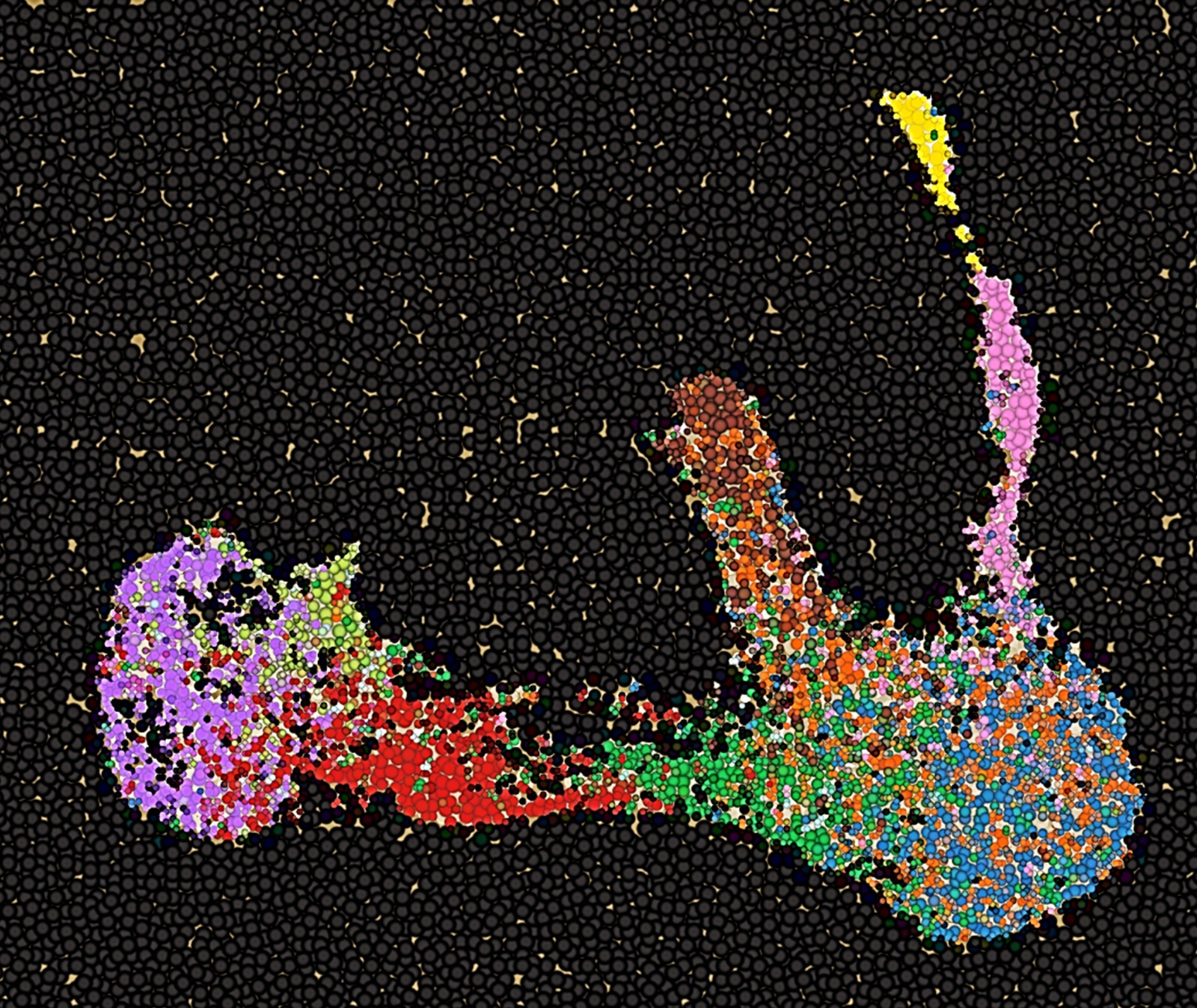
RPE cell trajectory from single-cell RNA-seq analysis. Image from Parikh BH et al. PNAS 2023 Jun 27;120(26):e2214842120.
Age related macular degeneration (AMD) is the leading cause of irreversible blindness in people over 55 in developed countries. Current treatments are limited to early stage neovascular AMD (nAMD) using anti-VEGF injections. However, patients with advancedstage disease are no longer responsive to anti-VEGF treatments, leaving them with few therapeutic options. Similarly, inherited retinal dystrophies (IRDs), characterized by progressive structural changes and functional impairment of retinal pigment epithelial (RPE) cells, currently have no curative or effective palliative treatments available. This significant clinical unmet need has driven our focus on developing innovative retinal cell and gene therapies.
While early clinical trials of RPE transplantation for AMD have shown preliminary signs of success, major limitations remain that must be addressed to achieve widespread clinical application.
Novel hypo-immunogenic stem cell source
Our research explores innovative approaches to retinal cell replacement therapy, focusing on alternative sources of stem-cell derived RPE and photoreceptor precusor cells (PPC). We are developing:
- Hypo-immunogenic cord-lining derived iPSCs that demonstrated superior graft-host integration for the treatment of AMD without requiring immune-suppression
- Novel scaffolds for the sub-macular transplantation of these retinal cells, tested in in large animal models to ensure clinical translatability
Retinal micro-environment biology
We seek to understand the retinal micro-environment using cutting-edge omics technologies. Through single-cell transcriptomics and proteomics approaches, we investigate cellular interactions and signaling pathways that maintain retinal homeostasis and contribute to disease pathogenesis.
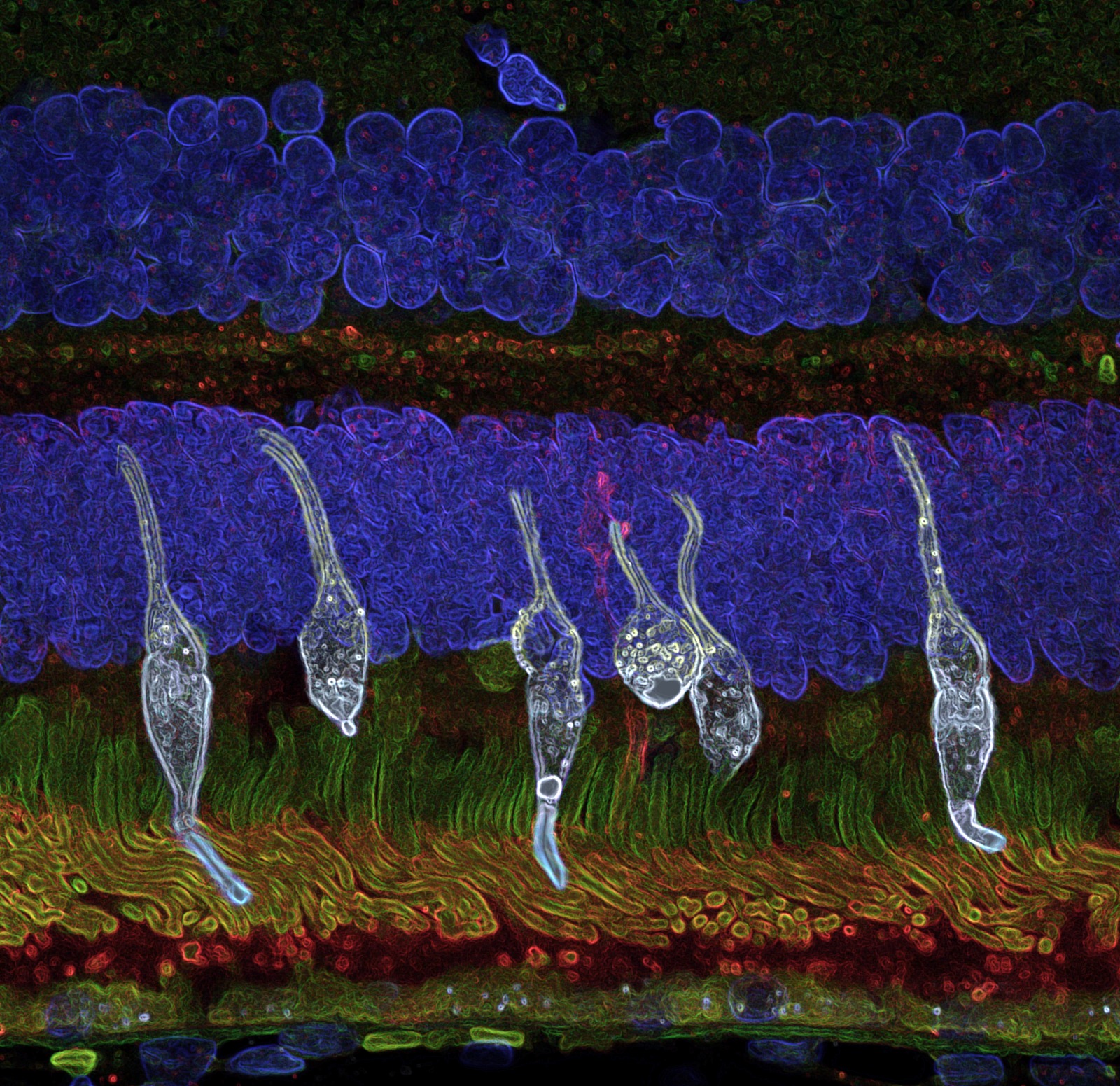
Photoreceptor cells (in white) transplanted into non-human primate eye. Image from Lingam S et al. Stem Cell Res Therapy. 2021 Aug 19;12(1):463.
Understanding the complex mechanisms underlying retinal degenerative diseases is essential for developing effective treatments. Our lab has established comprehensive disease modelling platforms that bridge the gap between laboratory research and clinical application, enabling us to study disease progression and test potential therapies in physiologically relevant systems.
In-vitro iPSC disease modelling for Age-related Macular Degeneration (AMD) and Inherited Retinal Dystrophy (IRD)
We maintain extensively phenotyped cohorts of patients with AMD and IRDs and patient-derived biobanks for in-vitro disease modelling. These carefully characterized patient populations provide crucial clinical context and biological samples that inform our research and validate our therapeutic approaches.
Our laboratory has established comprehensive biobanks containing:
- Patient-derived peripheral blood mononuclear cells (PBMCs) that preserve the genetic and molecular signatures of retinal diseases
- Patient-specific induced pluripotent stem cells (iPSCs) reprogrammed from patient samples, maintaining disease-relevant genetic backgrounds
Using these patient-derived iPSCs, we generate sophisticated in vitro disease models, including iPSC-derived RPE cells and retinal organoids that recapitulate key features of human retinal diseases. These cultured models allow us to study disease mechanisms at the cellular and molecular level while testing potential therapeutic interventions and creating foundational data for AI-powered modelling.
AI-driven retinal drug discovery
In collaboration with A*STAR Bioinformatics Institute (BII), we are developing advanced computational approaches for retinal therapeutics that will complement cell-based models by offering powerful predictive tools that support the development of safer, more effective retinal therapies.
Vitreo-retinal surgical techniques
Using our advanced in-vivo modelling capabilities, we develop innovative surgical techniques at our specialized ophthalmic surgical suite with state-of-the-art equipment.
Biomaterials Augmentation
In collaboration with Dr. Loh Xian Jun from the Institute of Materials Research and Engineering (IMRE), we have developed a biodegradable and thermosensitive hydrogel (Vitreogel™) that addresses critical limitations of vitreous tamponade agents used in vitreo-retinal surgeries. This innovative polymer-based hydrogel is injected into the eye as a liquid and transforms into a gel state upon contact with body temperature, functioning as an effective internal tamponade agent. The material is biocompatible and uniquely stimulate the reformation of a native vitreous-like body in-situ after biodegradation. More recently, we have also demonstrated its ability to prevent post-operative eye scarring. This innovation has been granted patents in the US, China and Europe. The promising clinical potential of this technology led to the founding of Vitreogel Innovations, a spin-off company, dedicated to advancing Vitreogel™ through clinical trials.
Our lab is currently preparing for the clinical translation of Vitreogel™ while expanding the applications of this biomaterial technology platform.
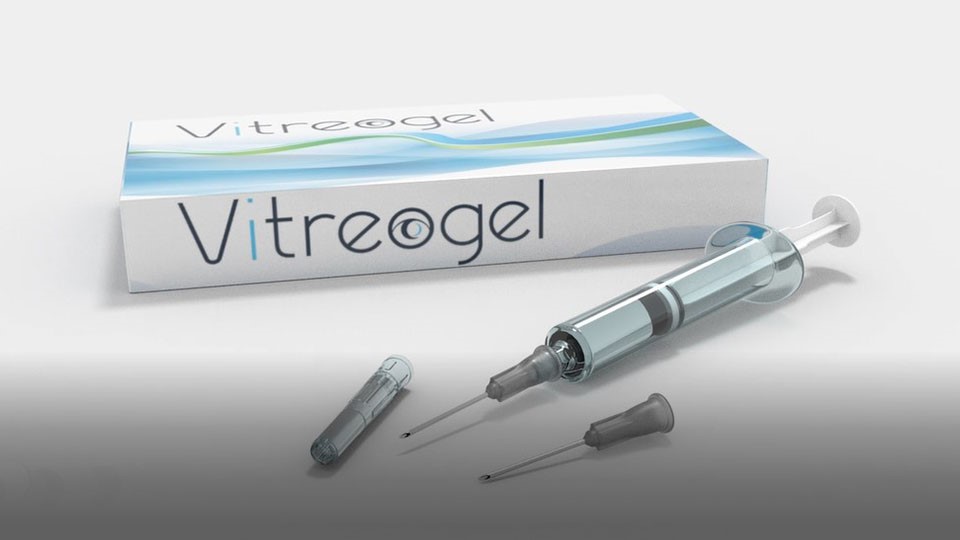
Our patented bio-functional thermogel product – Vitreogel™.
We are investigating the use of our biomaterial technology for:
- Sustained ocular drug delivery systems using polymeric micelles for delivering biologics, including anti- vascular endothelial growth factor (anti-VEGF) molecules, to the retina through topical administration and injectable thermogelling polymer matrix loaded with drug molecules such as tyrosine kinase inhibitors, engineered for long-acting drug release.
- Advanced polymer-based scaffolds for retinal tissue engineering to facilitate stem-cell transplantation for retinal diseases by providing the structural support and biochemical cues necessary for successful cell integration and tissue regeneration.